In Their Own Words: Reflections and Testimonies After Healing Classes (Part 2)

Part 2 of a 5-Part Blog Series

From Trauma, Anxiety, and Depression to Healing, Peace, and Hope

If you have walked through the experience of abortion and found it traumatic, you are not alone. If you’ve ever struggled with anxiety or depression and are beginning to realize that some—or all—of it may stem from a past abortion, healing and hope are possible.
Let us take a reverent pause to honor the courage of the countless women who have chosen to actively pursue healing for their minds and spirits, as we listen to what they have shared with us on this journey:

“The weekend group helped me receive a deeper level of healing from childhood trauma that had a lot of influence on my choosing abortion as a young adult.” — R.D.

“This program helped me uncover areas of my own heart that needed healing—things I didn’t even realize were still buried.” — T.L.

“Just knowing that I’m not alone, and that although abortion is a decision I made, it does not define who I am. I have hope and a future in Christ because God’s mercy is forever.” — M.B.

“The class helped me uncover areas of my own heart that needed healing—things I didn’t even realize were still buried. Walking through this with other women, hearing their thoughts, fears, and feelings, allowed me to unbind things I had been suppressing for over 20 years. As a believer who has had multiple abortions, I felt completely comfortable, accepted, and supported throughout this journey.” — T.L.

“I’ll admit to some anxious feelings going into it since my story is a little different, but God led me through weeks of self-reflection as I prepared. I was encouraged to join because hurt is hurt, and pain is pain—and even though my particular brand of hurt doesn’t look like everyone else’s, there is still healing and restoration to be found through this study. I’m so glad I gave it a chance.” — T.C.

“Healing from our own sin takes trust, and the process looks different for us all, but one thing we share is our need for the love of our Lord, Christ Jesus. I gained a new understanding of this truth as I experienced love and acceptance from a group of strangers who have become so much more.” — D.P.

“Jesus truly showed up and touched deep, open wounds, giving me new tools and pathways to continue healing.” — T.L.

At An Even Place, we walk alongside you on a personalized road to healing with love and compassion. If you or someone you know is struggling with the aftereffects of abortion trauma, we invite you to reach out to us:

👉 https://anevenplace.com/interest-form/

Part 3 of this 5-part blog series will be posted soon.


In Their Own Words: Reflections and Testimonies After Healing Classes (Part I)

Part 1 of a 5-Part Blog Series

From Denial, Numbness, and Anger to Acceptance, Reconnection, and Forgiveness

What are women saying about the condition of their hearts before and after participating in an abortion healing class?
While it can be heartbreaking to hear words weighted with long-held secrecy, isolation, trauma, regret, and shame, their voices matter. There is power in witnessing the transformation that occurs as women move from numbness, grief, anger, unforgiveness, anxiety, depression, and a sense of motherhood lost—into healing and freedom.

When we consider that more than a quarter of the world’s population carries this kind of heaviness, we begin to understand the depth and breadth of abortion’s painful and lasting impact.

Our online healing classes are comprised of experienced leaders and participants who have gone through a thorough intake process to ensure they are ready to begin the healing journey. Join us for this four-part exploration as we share real-life reflections and testimonials from women before and after completing healing programs through An Even Place.

Series Overview

    • Part I: Denial / Numbness / Anger → Acceptance, Reconnection, and Forgiveness

    • Part II: Trauma / Anxiety / Depression → Healing, Peace, and Hope

    • Part III: Unforgiveness / Shame → Forgiveness and Freedom

    • Part IV: Grief / Motherhood Loss → Healing, Motherhood Restored, Memorialization

    • Part V: Isolation → Community


“After 36 years, I still couldn’t say the word abortion until I went through healing. Denial is powerful.”— L.T.

M.L. shared about numbness:

“When I faced the fact that I had an abortion and that it was a baby, I was surprised by how numb I had felt for so many years.”

Another participant reflected on unexpected anger:

“I didn’t think the chapter on anger was for me or that I’d get anything out of it. I’m not an angry person. Boy, was I wrong. It ended up being the most challenging and rewarding part of the Forgiven and Set Free class.”
— Anonymous

“Taking the Forgiven and Set Free class helped me work through anger issues I didn’t realize I had. It was the next step I needed to move forward.”
— M.G.

“After completing the class, I found healing from anger that I never knew I needed. It closed the gap in my relationship with God, and I feel more connected to Him than ever before.”
— M.C.

“The leaders were amazing. They navigated such deep waters with God’s wisdom and grace. It was a faith-building experience.”
— K.S.


At An Even Place, we walk alongside you on a personalized road to healing with love and compassion. If you or someone you know is struggling with the aftereffects of abortion trauma, we invite you to reach out to us:

👉 https://anevenplace.com/interest-form/

Part 2 of this 5-part blog series will be posted soon.

There Is A Place To Honor Your Baby

By Jenny Foster

If you’ve loved and lost a baby, there is a place. 

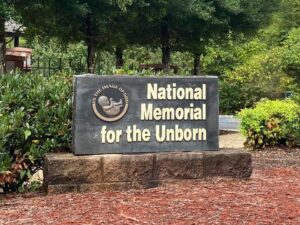
In 2020 I discovered a special place in Chattanooga, Tennessee. It’s called The National Memorial for the Unborn. I was honored to travel to the memorial in person to install a permanent plaque for my lost baby boy. It was a day I will never forget. When we open our hearts to conversations about loss, it’s surprising how many families have lost children to abortion, miscarriage, and stillbirth. I am grateful to the people who manage this beautiful memorial building and grounds. May it continue to bless many in their healing journeys.

From their website: “The National Memorial for the Unborn is dedicated to healing generations of pain associated with the loss of aborted and miscarried children. No longer must these children remain nameless and forgotten, but are honored through the Memorial’s ‘Wall of Names’ and ‘Remembrance Garden’ allowing mothers, fathers and other family members to begin the healing process.The 50-foot granite ‘Wall of Names’ holds small brass plates with words of remembrance from individuals and families all over the country seeking post-abortion healing. Our Remembrance Garden is a peaceful sanctuary for mothers, fathers, and other family members to honor their miscarried child. Engraved brick pavers placed along the garden paths share their personal stories and provide encouragement to others seeking peace and solace there.”

As an author and abortion recovery leader, Jenny Foster is passionate about meeting hurting hearts with love and compassion. She shares the hope and forgiveness found in Christ with those seeking healing and freedom. You can reach Jenny at jennyfoster@anevenplace.com.   

National Memorial for the Unborn


October is Pregnancy & Infant Loss Awareness Month: How To Honor Your Baby?

By Jenny Foster

Each year on October 15th, many women and families press pause on their busy lives to remember babies lost to miscarriage, stillbirth, SIDS (Sudden Infant Death Syndrome), ectopic pregnancy, and other reproductive loss stories. Many recognize the entire month of October as dedicated to this tender cause.
While abortion for anything other than medical reasons was often conspicuously absent from the conversation at some of these events, the dialogue has shifted to be more inclusive of reproductive loss of any kind, as we understand that losing a pregnancy through any means is a traumatic loss. Definitions have been expanded to include reproductive disappointment or reproductive grief, such as infertility from all causes, perinatal death, failed surrogacy, failed adoption, selective reduction, and abortion, whether spontaneous or induced. Regardless of the type of loss that any one organization may list on their website, if you have had an abortion, you are not disqualified. You have every right to grieve, remember, memorialize, and celebrate your baby. In a world that favors silence on the topic of abortion, mothers, fathers, and families are often left feeling that they cannot talk about their pain, their grief, their loss, or their babies.  

Some organizations that hold observances are grief and bereavement groups, pregnancy centers, non-profits, churches and other ministries, online communities, and many more. Around the country and the world, remembrance services, memory walks, candle lighting ceremonies, and prayer vigils are held to give people the opportunity to recognize the sanctity of the lives of their children, whether alive on earth or gone to heaven.

Pregnancy and Infant Loss Awareness Month restores dignity to broken hearts and to those who feel that if they chose to terminate the lives of their babies, they have somehow terminated their right to love, to hurt, and to remember their lost children. 

If you have experienced an abortion or abortions in your past but have carried your loss silently, in secrecy, and perhaps in shame, please give yourself time this month to check out some of these organizations. As the leaves fall this season, let your tears fall. Reach out to others through social media, prayer or support groups, abortion healing programs, or friends and family. Know that you are not alone. Millions of people carry invisible holes in their hearts for children they will never hold this side of eternity.  

A woman who has an abortion is still a mother, as is the father who loses a child through abortion. Both deserve to grieve the loss of their motherhood or fatherhood and the dreams that never came to be. You are worthy, and your children are worthy of a day of remembrance, love, and honor. Healing happens when we take the time to feel the feelings surrounding reproductive loss. 

To learn more about Pregnancy and Infant Loss Remembrance Day, visit any of these helpful links to find in-person and online events near you. 

As an author and abortion recovery leader, Jenny Foster is passionate about meeting hurting hearts with love and compassion. She shares the hope and forgiveness found in Christ with those seeking healing and freedom. You can reach Jenny at jennyfoster@anevenplace.com. 

https://www.october15th.com

https://en.wikipedia.org/wiki/Pregnancy_and_Infant_Loss_Remembrance_Day

https://www.memorialfortheunborn.

When Doctors Recommend Abortion: Trusting God Through a Difficult Diagnosis

By Jenny Foster

You Are Not Alone

Have you received a frightening prenatal diagnosis during pregnancy? You are not alone. A poor prenatal prognosis indicates there could be serious problems with a baby due to complications or abnormalities detected during prenatal testing. This means there’s a higher risk of adverse outcomes such as miscarriage, stillbirth, or severe health problems in the newborn. Each year in the United States, approximately 120,000 pregnancies are affected by fetal anomalies, according to the Centers for Disease Control and Prevention.While the label “birth defect” is a medical term, it certainly does not mean that these individuals are defective. Regardless of your personal beliefs about when life begins, I think we can agree that all life has beauty and value. 

Understanding Prenatal Diagnoses

Birth defects can range from mild to severe, and life expectancy depends on which body part or parts are involved and to what degree. They happen due to a complex mix of factors, including our genes, behavioral choices (such as nutrition, drinking alcohol, or taking recreational or prescription drugs), maternal age, the environment both inside and outside of the womb, and chance. 

Screening and Diagnostic Tests

Non-invasive prenatal tests (NIPT) screen for many conditions using fetal DNA found in maternal plasma and can detect common issues like Trisomy 21 (Down Syndrome). However, NIPT for rarer conditions can produce a high number of false positives. Prenatal testing can indicate an increased risk but does not guarantee that the condition is present. Invasive diagnostic procedures such as amniocentesis remain vital for confirming NIPT results and diagnosing genetic disorders. NIPT can also yield false negatives, meaning the test shows a low risk when the fetus has a condition.2 Sensitive and informed genetic counseling, resources, and support are crucial to help parents understand the results of prenatal screening and testing.

Treatment Options Before Birth

Some birth defects, like spina bifida, certain heart defects, diaphragmatic hernias, lower urinary tract obstructions, and other conditions, may be eligible for prenatal treatment inside the womb, which can lead to significant improvement.3 Receiving a difficult diagnosis before birth requires that parents have some time to process the diagnosis and seek experienced clinicians and loving support to help them prepare for an affected infant after delivery. 

In the U.S., a significant proportion of women choose to terminate pregnancies when presented with an adverse prenatal diagnosis. Estimates suggest that the vast majority, ranging from 67% to 90%, of pregnancies diagnosed with Down syndrome end in abortion. Similarly, a large percentage of pregnancies diagnosed with other “life-limiting” conditions, like Trisomy 13 and 18, are also terminated.4

In the US, the legality of abortion following a poor prenatal diagnosis varies by state. Many bans do not explicitly address fetal anomalies, leaving it to medical professionals to interpret whether the condition constitutes a life-threatening situation for the pregnant person. 

Survival Rates and Hope

According to the Glasgow Register of Congenital Anomalies, children were followed to assess survival rates from birth up to the age of 5 years. The proportions of all live-born infants with congenital anomalies surviving to the end of the first week, and first and fifth years were 94%, 89%, and 88%, respectively. While the survival rate beyond age 5 shows a decrease, this does leave a significant proportion of babies with fetal anomalies surviving to adulthood.5 Overall, this study illustrates the fact that almost 90% of live-born infants with congenital anomalies survive to five years. While most babies with birth defects survive their first day (around 98.9%), the probability of survival has been documented as high as 93.9% at 10 years in some situations.5

The Role of Perinatal Hospice

While up to 81-90% of women choose to terminate a pregnancy after receiving a lethal or life-limiting diagnosis, approximately 40% of women in a British study chose to continue the pregnancy when offered perinatal hospice and palliative care. Women are more likely to carry a pregnancy to term when they feel they have strong support from their partner and other family members. Perinatal hospice is a specialized form of care focused on supporting families when a prenatal diagnosis indicates a life-limiting condition for their unborn child. It compassionately guides families through pregnancy, birth, and the time following birth until the baby’s death. It centers on enhancing the quality of life for both the baby and the family, focusing on comfort, emotional support, and meaningful experiences during the limited time the family has together.

Faith, Grief, and Healing

An NBC news story featured families who found meaning and dignity in the lives of their children who lived for only a short time. During the short life of their son Gabriel, his sisters and extended family met him and held him, and the baby’s father baptized Gabriel himself when it was clear the priest wouldn’t arrive before he died. He was beautiful, Kuebelbeck remembers. “Born perfect, except for his heart,” read the announcement she sent out about Gabriel’s birth and death. Some have wondered why she’d put herself through a pregnancy and birth when she knew she’d go home with empty arms. “It isn’t all for nothing,” she says. “You can still love that baby, protect that baby, and give that baby a peaceful goodbye. That’s not nothing.” “I wanted people to experience him,” she says. “And I think he was experiencing being held.”6

Final Thoughts

Diagnosis of a life-limiting fetal condition should not be an automatic death sentence. While abortion cannot heal or reverse a diagnosis, some families find that continuing the pregnancy provides a sense of peace and purpose during an otherwise painful time. Babies diagnosed with a medical condition often face discrimination, both inside and outside of the womb. The journey for each baby with a life-limiting condition is unique, and these babies deserve special attention and individualized medical care, just like any other child. Every baby and every life has a God-ordained purpose, whether it be to impact the world through a life of 80 years, or a life of only 16 days or 16 hours. The impact of giving every baby a chance to experience life and love, to feel the arms of their parents, siblings, family, and friends, to hear, smell, taste, and see what they can is a beautiful act. Love can be felt. A baby that only lives a short time impacts a wider circle of people than most people realize— from the doctors and medical staff to friends and neighbors who might meet the baby, and to people who only hear the story. Every life has an impact, like a ripple in a pond, often with more far-reaching effects than we’ll ever know. A baby’s life, though short, brings us lessons on the sanctity and fragility of life, illustrates the powerful and unconditional nature of parental love, and may even bring someone to saving faith in Jesus Christ.

The grief of surrendering a baby to abortion vs. the grief of losing a baby to a fatal diagnosis shares similarities and differences. Many women who have chosen abortion say they would give anything for a chance to hold their baby, even for a moment. They would rather have met their baby, even if it was traumatic, than to deprive their mind and heart of the chance to have a lasting image of the infant they could hold on to for the rest of their life. Many mothers and families are relieved that they let God make the choice about the length of their child’s life rather than being the ones to make the impossible choice. With abortion, guilt and shame can be powerful and debilitating. With a natural death, no matter how heartbreaking, grief has a path that is well understood and can be navigated with faith and support. 

Support

If you are faced with the heart-wrenching decision as to whether or not to continue your pregnancy in the face of a daunting prenatal diagnosis, give yourself the time you need to process the news, research what life may look like for those who are living with the condition, and gather your support system and resources. As with any major life event, basing a decision to abort or to continue with a pregnancy should not be made in haste or under pressure. Take the time to gather the facts, recruit your support team, and reflect on the lifelong impact that abortion will have not only on your baby, but on your heart.

The team at An Even Place is here to listen with love and refer you to organizations that can help. Connect with our services here

As an author and abortion recovery leader, Jenny Foster is passionate about meeting hurting hearts with love and compassion. She shares the hope and forgiveness found in Christ with those seeking healing and freedom. You can reach Jenny at jennyfoster@anevenplace.com.  

https://www.cdc.gov/birth-defects/about/index.html

2 https://pmc.ncbi.nlm.nih.gov/articles/PMC10417786/ 

https://www.mayoclinic.org/tests-procedures/fetal-surgery/about/pac-20384571

https://pubmed.ncbi.nlm.nih.gov/10521836/

https://pubmed.ncbi.nlm.nih.gov/2501581/

https://www.nbcnews.com/id/wbna23682263https://lozierinstitute.org/five-facts-about-life-limiting-fetal-conditions/

The Blessing In The Struggle

If you’re in the middle of a struggle right now and you’re seeking God, clinging to His truth, leaning on His Word but still can’t seem to see your way forward, do not despair. If God is with you, then you are in the best and safest place you can be.
Struggles come from many places. Sometimes they’re the result of our own sin and poor choices. Other times they stem from circumstances beyond our control. But whatever the cause, don’t abandon the struggle in search of an easier way. Reject the cheap comforts, the numbing habits, and the false security of coping mechanisms. Be in the struggle. Because if God has led you here, He has something for you in it.

Genesis 32:22–32 tells the story of Jacob, returning to the land promised to his father and grandfather. He was afraid. His brother Esau, whom he had deceived long ago, was coming to meet him. That night, Jacob found himself wrestling with a Man, who we now understand to be the Lord Himself. They wrestled all night. God could have stopped the match, spoken a word of truth, and left it at that. But He didn’t. He let Jacob wrestle.

And in the end, Jacob cried out for a blessing. We don’t know exactly what was in his heart in that moment, but if you’ve ever wrestled with God’s truth, desperate for transformation, you understand. “Lord, make me different.” Jacob, the deceiver, the manipulator, was changed that night. His name, his direction, his heart. He walked away wounded, yes, but also blessed, transformed, and made new.

Whether your struggle is of your own making or the result of life’s cruelty, know this: God desires to bless you with new life. That’s why Jesus came. He died on your behalf because He knows you can’t make yourself right. Only His blood can cover your shame. Only His grace can set you free.

Call out to Him. Acknowledge your sin. Invite Him to rule your life.

“The Lord is gracious and full of compassion, slow to anger and great in mercy.” – Psalm 145:8

Don’t run from the wrestle. Embrace the struggle. God meets us there.

Is Your Abortion a Secret?

By Jenny Foster
 
If you’re reading this, you are courageous! It likely means that you want to understand more about the impact abortion has had on your life or the life of someone you love. Perhaps you’ve already received deep healing related to a past abortion or abortions, and if that’s your story, we celebrate with you! More often, we meet women at the beginning or the middle of their healing journey. Where do you find yourself today?

One of the first steps in healing from something painful or traumatic is to determine if you are in denial. Denial means declaring something untrue. In other words, it’s a natural defense mechanism that tells us “it didn’t happen,” and if it didn’t happen, then we’ll be okay. Denial helps buffer the immediate shock of a painful event, but when it continues too long, it can hinder the grief and healing process. Denial works in opposition to one of the ultimate goals of the healing process —acceptance. If any of this sounds familiar, consider digging deeper into how denial shows up in your life. 

One of several key indicators of denial is secrecy. If we don’t tell anyone about our abortion experience, perhaps there’s still a chance that it didn’t happen. If we keep our abortion a secret, maybe we can keep the aftermath of feelings from bubbling up in our bodies, minds, and spirits. If we don’t tell anyone, we can better control feelings of guilt or shame, grief, or regret. Secrecy helps us lock up our pain in a back room closet, as we try to throw away the key. Secrecy helps to keep the experience at arm’s length, disassociating us from trauma. 

While a significant percentage of women tell the baby’s father about the pregnancy and abortion plan, it’s not always the case. It can seem easier to push down painful feelings when we tell ourselves that just a few people know, and even simpler if we opt to tell no one at all. While managing control of the secret can feel like we have some power over the trauma, we are still holding onto the memories, working hard to push them down. On the outside, we may look like “everything’s fine” and that we have it all together. At the same time, on the inside, many women can experience flashbacks, nightmares, anxiety, depression, shame, relationship difficulties, anger, unforgiveness, overprotectiveness of other children, avoidance of specific places and situations, and more. 

While I’m sure you can answer the question, “Who have I told?” ask yourself, “Who have I not told?” Did you decide not to tell your in-laws, OB-GYN, or church friends? Did you experience abortion before you got married and choose not to tell your husband? If you feel comfortable, ask yourself, “Why have I not told anyone else?”

  • Do I feel too ashamed to share the secret?
  • Do I worry that if my friends knew, they would stop being my friends?
  • Will my husband think I lied to him, or leave me?
  • Are you concerned that the church won’t show compassion or will turn its back on you?
  • What else holds you back?

There are no rules about telling people. But it’s important to check in with yourself and evaluate whether you are guarding the secret for reasons that are holding you back in your physical, behavioral, emotional, or spiritual health. As many as one in four women sitting in the pews at church have walked through abortion just like you, but when churches don’t talk about abortion healing support, many of us interpret the silence as confirmation that we should keep our secrets. I spent twenty years in my church without telling anyone, and when I finally told the woman who to me personified the perfect “church lady,” I was shocked to find out that she had a painful past that included abortion, drugs, and alcohol abuse. No one has a perfect past. 

If you’re ready to step forward in your healing, God is the best first person you can talk to. He already knows every detail of your story, but He wants to hear from you. He loves you unconditionally, and He is faithful to forgive all sins. Jesus offers the safest place to share all that’s on your heart, and if you accept His love, “His yoke is easy, and His burden is light” (Matthew 11:30). You can leave the heavy burdens you carry at the cross. Moving past denial can be acutely painful, but if you keep moving forward to the next stage in the healing process, you’ll be moving in a direction that leads to profound self-discovery, compassion, and growth. Healing is a process you don’t have to shoulder alone. Find a friend, counselor, or abortion recovery leader you can trust who will walk next to you with unconditional love and support. 

As an author and abortion recovery leader, Jenny Foster is passionate about meeting hurting hearts with love and compassion. She shares the hope and forgiveness found in Christ with those seeking healing and freedom. You can reach Jenny at jennyfoster@anevenplace.com.

 https://anevenplace.com/telling-your-storyyour-abortion-story/


Breaking the Silence: Healing After Abortion in the Light of Christ

By Jenny Foster

Abortion—a word that, when spoken, creates discomfort for most. Reading the word just now, how does it make you feel? If you are one of the millions of women who have experienced abortion, are you able to say the word out loud? Have you told anyone about your abortion or abortions? If not, please take heart because many women take this painful secret to the grave, carrying the weight of it alone, in silence, in secrecy, in shame. Countless women don’t begin to process their feelings about a past abortion for ten, twenty, or even thirty years or more. For nearly twenty years, I couldn’t.

Sharing your story with someone takes courage and can feel terrifying. Everyone’s talking about abortion on the news, but is there meaningful discourse in the smaller communities composed of our friends, family, neighbors, or coworkers, let alone our churches and faith communities? Unfortunately, the silence is deafening. 

It is widely accepted that one in four women has experienced an abortion. Estimates hover around 73 million abortions performed worldwide every year, and this does not include unreported abortions.1 This equates to 200,000 abortions per day, impacting women, men, families, and society. This is a significant segment of the population moving through our communities. Have you found church a safe place to share your journey or seek healing resources? Are American pastors regularly talking about abortion and abortion healing resources? While friends and family have all met me with love and compassion, reflecting on my church experience over the last twenty-five years, the answer remains a resounding no. 

Why is there a shroud of silence over the topic of helping people heal from the impact of abortion? We have excellent support groups and resources for divorce care, grief and loss, addiction recovery, feeding programs for the hungry, and much more, but why are so few churches and religious institutions willing to engage on the topic of abortion healing? I empathize with church leadership, as abortion is a difficult topic that is complex to navigate and may pose a risk that the church might be viewed as aligning with one side of the issue or the other. The heartbreaking reality is that when churches are silent on abortion, as many as four in ten women in the pews interpret the silence as an unspoken directive to keep their abortion a secret.2

“Be alert and of sober mind. Your enemy, the devil, prowls around like a roaring lion looking for someone to devour.” 1 Peter 5:8 (NIV) We have a real enemy who loves to keep people stuck in the bondage of silence, secrecy, and shame. Many women share that they felt pressure from society to have an abortion, only to feel abandoned and on their own to deal with any aftereffects. From a spiritual perspective, consider the times the devil whispers over people to participate in something tempting or potentially unsafe, but once someone has said yes, Satan quickly switches sides to become our accuser.

Once a woman has an abortion, it’s in the past. Judgment achieves nothing positive, while love and compassion are the surest way to help wounded hearts. Abortion often comes with unspoken consequences for the mother, father, and families for years to come. Post Abortion Stress Syndrome (PASS) is recognized as a pattern of symptoms like PTSD that can affect many post-abortive women. Symptoms include depression, anxiety, flashbacks, nightmares, being detached or overly protective of future children, substance abuse, relational difficulties, and more. While I hope these symptoms aren’t familiar to you, please know you are not alone. 

As Christians, we have the faith, hope, and love of a savior who died for all people and all sins. Accepting the forgiveness of God after an abortion can be incredibly difficult. Even if abortion-wounded hearts come to accept the forgiveness of our merciful Savior, many refuse to forgive themselves. From a biblical perspective, it’s essential to ask ourselves what’s fueling our resistance to forgive ourselves. Jesus approached the hurting, the broken, and the sinful with love and compassion. While he told them to repent and turn away, Jesus did not use shame. 

“When church leadership is silent on abortion, as many as four in ten women in the pews interpret the silence as an unspoken directive to keep their abortion a secret.

If you are considering seeking help from the pain or aftereffects of abortion, there are many books, websites, resources, retreats, and online and in-person classes available that are confidential and emotionally safe. I’ve been honored to meet with organizations around the world who are helping women and families find the peace and freedom that is possible through Christ Jesus. While the church may often seem silent on this tender topic, time and again, I see their hearts immediately pivot to compassion as soon as they are informed that someone is struggling and in need of help.

As a woman who had an abortion, out of the deepest pain in my life, God continues the redemptive work of allowing me to help other women find a safe and confidential community built on the acceptance, love, and healing modeled by Jesus. Let us be guided by what Jesus would do. He approached the hurting, the broken, and the sinful with love and compassion. At An Even Place, we are passionate about providing healing from the emotional pain of abortion through Bible studies and group support. With love, compassion, and confidentiality, our goal is to journey along with women as they move out of silence and shame and into the freedom found in the light of Jesus. 

If you aren’t ready to take a class, please consider engaging our website at An Even Place. Our caring and trustworthy staff members can listen and help you take your next step toward healing and freedom. We care about you and are praying for your courage in the journey to renewed peace and joy.

As an author and abortion recovery leader, Jenny Foster is passionate about meeting hurting hearts with love and compassion. She shares the hope and forgiveness found in Christ with those seeking healing and freedom. You can reach Jenny at jennyfoster@anevenplace.com.  

1 https://www.who.int/news-room/fact-sheets/detail/abortion

2 https://care-net.org/churches-blog/new-survey-women-go-silently-from-church-to-abortion-clinic/

Why Didn’t God Stop Me From Having An Abortion?

The “Why didn’t God stop me from having an abortion?” question is often asked by those who know that God is sovereign over all things. And when the question is asked, it is because God knew that.

  1. The abortion of my baby would lead to depression and possibly suicidal ideation and attempts.
  2. The abortion would leave me sterile and unable to become pregnant again or contribute to other physical health injuries/issues.
  3. The abortion would have a negative impact on my relationship with the father of my baby or would destroy my relationship with the father of my baby.
  4. Thoughts of my abortion would lead me to becoming addicted to (fill in the blank) in order to numb the pain.
  5. My relationship with subsequent children would be affected by my abortion.
  6. My abortion would lead to feelings of guilt and shame.
  7. My abortion would leave me overwhelmed with grief over the loss of my child….

Because God is sovereign and knows everything that will take place after a woman aborts her baby, it becomes easy to see him as a tyrant in this situation. After all, God is all powerful and all knowing, and he is supposed to care about people and want what is best for them. Aborting the baby may have solved the immediate issue of an unplanned pregnancy, but the fallout was just as unplanned.

Often when the question is asked, there is no consideration of the ways God may have tried to intervene to stop the abortion. As we look at the ways in which God has worked when it comes to the death of another, we do not see a clear pattern unfolding. The very first death recorded in the Bible was Cain killing his brother Abel. God did not stop it. But he warned Cain in Genesis 4:7 (ESV) before it happened that “…sin is crouching at the door. Its desire is contrary to you, but you must rule over it.”  (Emphasis mine). Or, how about the edict of the Pharaoh in Egypt that called for the killing of the male babies of the Hebrews, but the life of Moses was spared when the midwives did not do as ordered. And even Moses, whose life was spared, would end up killing an Egyptian. 

Sure, God could have spoken in a loud audible voice and say “STOP! DON’T KILL YOUR BABY!” He could have encouraged the baby’s father to plead with the mother not to go through with the abortion, knowing it would have made all the difference in the world. He could have shut down the abortion clinic knowing it would be impossible for the woman to go elsewhere. There are many miraculous interventions that could have kept a woman from going through with the abortion. But how many of the non-miraculous ways did God use to warn against abortion that were ignored? What about 

    • I know this is wrong and I should not go through with it.
    • The waiting period that allowed for a change of mind.
    • The cost.
    • The pro-life signs and advocates imploring against it.

There are no clear answers to why God did not stop a woman from having an abortion. But God, in his sovereignty, was not surprised when she went through with it. 

It is clear though that God does love and care for people, even those who abort their children. He demonstrated his care by sending his son to pay the penalty for the sins of all humankind. Before the first person walked the earth, God planned the death of his son to forgive humankind of their sin (including abortion) and save them from eternal punishment for sin. So, when we consider that he did not spare his own son from death, we really should hesitate to question why he did not stop an abortion. Also, it cannot be overlooked that all humankind has been given free will by God to choose to do or not to do something. While it is easy to shift the blame to God when he could have stopped an abortion (or any other wrong for that matter), ultimately, the responsibility lies with humankind who can choose to stop an abortion.

Thank you for taking the time to read this article written specifically for those healing from abortion. Sometimes, an abortion experience can create intense emotions that you may not feel equipped to manage on your own. If you are new to a healing journey or want to talk to an experienced advocate, please visit

https://www.memorialfortheunborn.org/resources/healing-programs. If you are thinking or planning to harm yourself, please call the National Suicide Prevention Lifeline at 1-800-273-TALK (1-800-273-8255) for immediate help.

National Memorial for the Unborn

Restoring Motherhood after Abortion

Abortion takes from us not just a pregnancy, but often our motherhood.  Many of us are left feeling that we are no longer worthy or able to become mothers. We struggle being around the babies of our friends. We skip the showers. We ignore Mother’s Day. We have repeat abortions.

“…no longer worthy or able…”

Men also experience this fallout.  My college partner told me years after “our” abortion that he never felt he could be a father because he had “failed”.

If we are not able to get pregnant after abortion, the mantra plays in our heads, “I would not have been a good mother anyway.”

“I’m not a good mom”

If we have other children, the mantra plays, “I’m not a good mom” or “I have to prove I’m a good mom by ….”  It colors our mothering with regret and fear and wondering about how the lost child would have compared to and related to our living children. We even can fear that God will get even with us by allowing something bad to happen to our other children.

Don’t let your abortions rob you of mothering your future children, your current children, and even the other children in your life. With healing, God can replace in our hearts the ability to nurture and love little ones freely and well without guilt or pain.  To pour ourselves into the next generation. And in that selfless sacrifice comes joy at seeing lives grow and thrive.

“The journey of healing…”

The journey of healing after abortion is painful for most of us, but the sooner you begin, the less impact the trauma of abortion will have on your life and family. Recovery from abortion includes walking through both guilt and grief.  We must squarely face what we chose, why we chose, and how it impacted us and others.  Don’t make this journey alone.  There are many of us that have walked it before and found healing and peace.

“…grieve the loss of YOUR children…”

One of the keys to restoring your motherhood is to grieve the loss of YOUR children – unique individuals – lost to abortion. Give them dignity and honor. Grief, while painful, leads to closure. Say hello, and then say goodbye for now.

A special task given to mothers and fathers is to choose a name for their children. Naming your children lost to abortion helps give them personhood, acknowledges their existence and that they are a part of your family. The National Memorial for the Unborn, MemorialForTheUnborn.org, provides one way to honor them by placing their name on a permanent wall.

“…silenced by truth…”

When we can accept our role as mother to our lost children, then we are released to mother other children well out of a place of healing, forgiveness and the wholeness God offers us in Jesus. The lies in our heads about not being good mothers will be silenced by truth. We will be free to love.

One lady who went through a recovery group with me recently had two abortions, never had other children, and throughout the study repeated that she just “wasn’t into kids” and could never have been a good mother. Several months later she told me that for the first time ever she had celebrated being a mother on Mother’s Day.  The new joy and peace in her face was beautiful.

“Restoring motherhood stolen…”

Motherhood is not about biology – it is about love. Restoring motherhood stolen by abortion is not about our bodies – it is about our hearts.

We cannot take back our choice to have an abortion, 

but we can take back our choice not to love our children 

and make room in our hearts for them.

Many great resources and people are available to help you through this healing journey.  Don’t let abortion isolate you. You are not alone. There are others who have made this journey and found wholeness and yes, even joy. Reach out today by clicking the resources button on this site.

by Linda Keener Thomas

National Memorial for the Unborn

MemorialForTheUnborn.org